Understanding Tendon Injuries
Tendons are tough, fibrous tissues that connect muscles to bones, enabling movement and stability throughout the body. Despite their strength, tendons can become injured due to overuse, sudden trauma, or underlying medical conditions. Recognizing and addressing common tendon injuries early is crucial to prevent long-term damage and promote effective healing.
Types of Common Tendon Injuries
1. Tendonitis
Tendonitis is the inflammation or irritation of a tendon, often caused by repetitive motion or overuse. It typically results in pain, swelling, and restricted movement. Common examples include tennis elbow (lateral epicondylitis) and runner’s knee.
2. Tendinosis
Tendinosis is a chronic condition characterized by the degeneration of tendon collagen due to failed healing responses over time. Unlike tendonitis, it involves little to no inflammation but can cause persistent pain and stiffness.
3. Tendon Tears and Ruptures
Tendon tears range from small partial tears to complete ruptures where the tendon separates from the muscle or bone. These injuries often occur due to sudden trauma or forceful impact and may require surgical repair.
Most Common Areas Affected by Tendon Injuries
Achilles Tendon Injuries
The Achilles tendon, located at the back of the ankle, connects the calf muscles to the heel bone. Achilles tendonitis and ruptures are prevalent in athletes and physically active individuals, causing pain, swelling, and difficulty walking or running.
Rotator Cuff Tendon Injuries
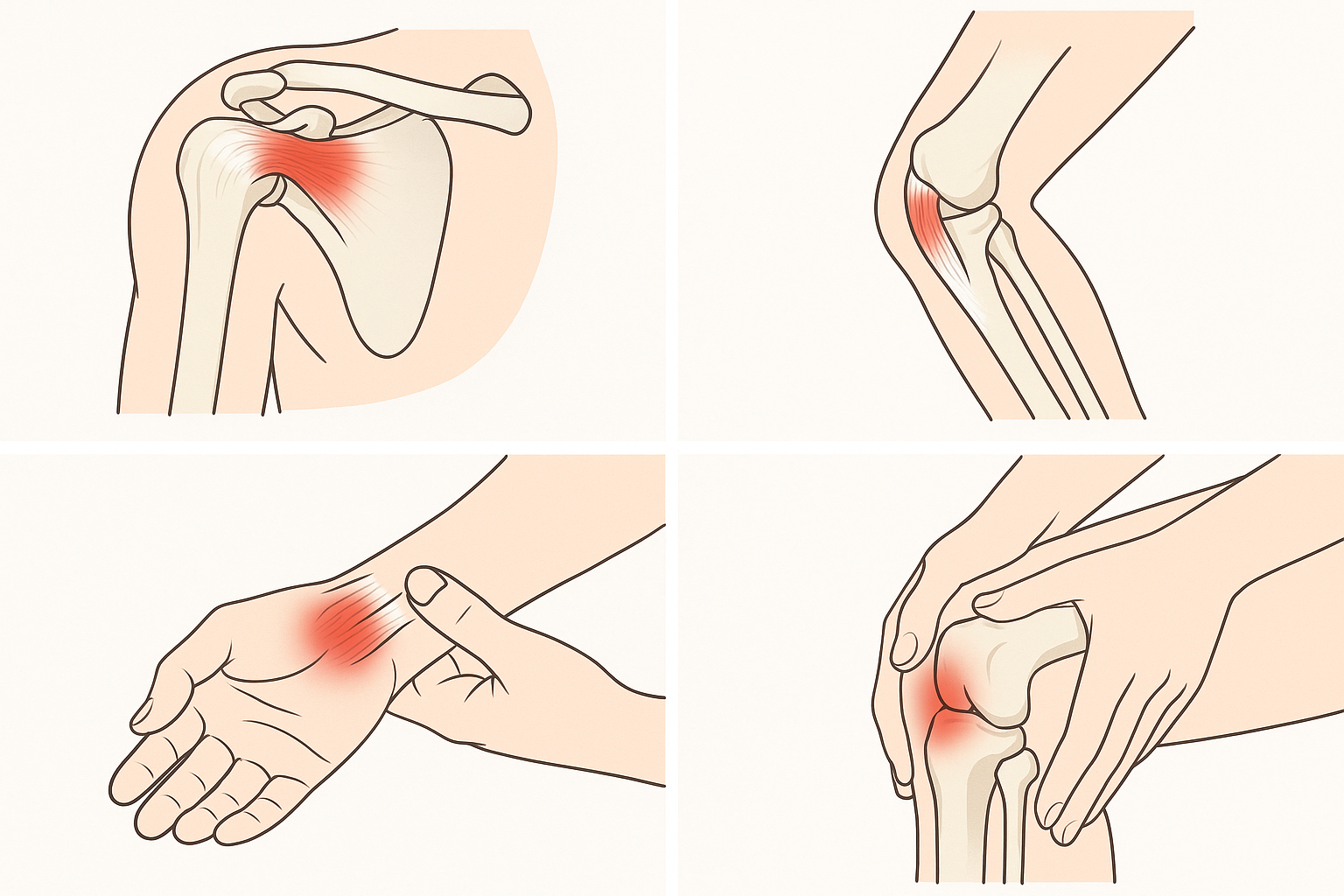
The rotator cuff is a group of tendons surrounding the shoulder joint. Injuries like rotator cuff tendonitis or tears can lead to shoulder pain, weakness, and limited range of motion.
Patellar Tendon Injuries
The patellar tendon connects the kneecap to the shinbone and plays a key role in knee extension. Patellar tendonitis, also known as jumper’s knee, is common among athletes involved in jumping sports.
Elbow Tendon Injuries
Conditions such as tennis elbow and golfer’s elbow affect the tendons around the elbow. They usually result from repetitive wrist and arm motions and can cause localized pain and tenderness.
Symptoms to Watch For
Tendon injuries commonly present with symptoms such as:
- Pain near the affected tendon, especially during or after movement
- Swelling and tenderness
- Stiffness or reduced flexibility
- Weakness in the associated muscle
- A popping or snapping sensation in cases of rupture
Diagnosis and Treatment Options
How Are Tendon Injuries Diagnosed?
A thorough physical examination along with the patient’s history typically guides diagnosis. Imaging methods such as ultrasound or MRI may be used to assess the severity and specific location of the injury.
Treatment Strategies
Treatment generally starts with conservative measures, including:
- Rest: Avoiding activities that worsen the pain to allow healing.
- Ice: Applying ice packs to reduce inflammation and swelling.
- Compression and Elevation: These can help control swelling.
- Physical Therapy: Strengthening and stretching exercises to restore function.
- Medications: Nonsteroidal anti-inflammatory drugs (NSAIDs) to manage pain.
More severe cases, like complete tendon ruptures, may require surgical intervention followed by rehabilitation.
Preventing Tendon Injuries
To reduce the risk of tendon injuries, consider the following tips:
- Warm up and stretch properly before physical activity.
- Gradually increase the intensity and duration of workouts.
- Incorporate strength training to improve muscle and tendon resilience.
- Use proper technique during sports and exercises.
- Wear appropriate footwear and equipment.
- Allow sufficient rest and recovery time between activities.
When to See a Doctor
If you experience severe pain, swelling, bruising, or difficulty moving a limb, it’s important to seek medical attention promptly. Early diagnosis and treatment can prevent complications and chronic issues.
Conclusion
Tendon injuries are common but often preventable conditions that require timely attention. Understanding the causes, symptoms, and treatment options can empower you to protect your tendons and maintain a healthy, active lifestyle. Remember, a balanced approach combining rest, proper exercise, and medical care when needed can make all the difference in recovery.