
Shockwave Therapy: A Practical Guide to Treatment Questions
A practical, balanced overview of shockwave therapy, including evaluation, evidence, safety questions, and what to ask at a consultation.
5 min read · By Anchor Restorative Medicine · Not reviewed
Key points
- Shockwave therapy is not automatically right for every person or condition.
- A thorough evaluation and discussion of risks, alternatives, and expectations should come before treatment.
- Anchor Restorative Medicine describes care as clinician-guided; individual assessment determines suitability.
- Ask how progress will be measured, what follow-up involves, and when to reconsider the plan.
Start with the question you want answered
People often begin researching shockwave therapy after ongoing symptoms, a recommendation, or a desire to explore another option. Online descriptions can make a treatment sound simple or certain. A more useful first step is to name the concern you hope to address and ask whether this approach has evidence for that particular concern.
Medical care is individual. The same symptom can have several causes, and a treatment that is reasonable for one person may be inappropriate for another. A clinician should review your history, current medicines, prior treatments, and goals, then explain what is known and what remains uncertain.
What the service involves
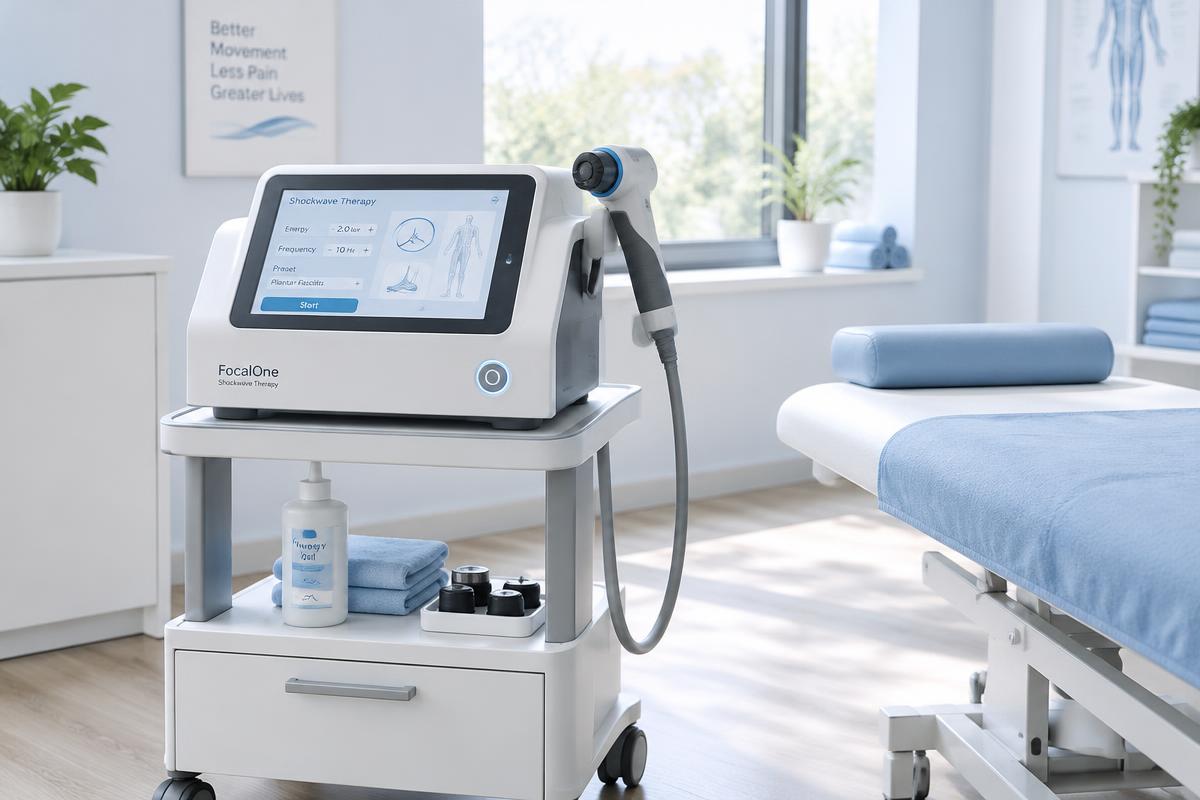
Shockwave therapy is an umbrella term often used for devices that deliver acoustic pressure waves or electromagnetic energy. Anchor describes two approaches: focal shockwave, which applies acoustic pressure waves to targeted tissue, and EMTT, which uses electromagnetic pulses. They are non-invasive office treatments, but they are not interchangeable with every other device marketed as “shockwave.” Ask which technology is proposed and why it suits the area being treated.
The practice describes use for chronic musculoskeletal concerns, including joint discomfort, tendon problems, plantar heel pain, sports injuries, and repetitive strain. A service listing is not a promise that any one condition will respond. Persistent pain can arise from different causes, and the best plan depends on a careful assessment rather than a device name alone.
These details describe the practice’s service information, not a guarantee of effectiveness. Treatment schedules and recommendations can differ. The clinician should make clear what is included in a visit, what is optional, and what costs or coverage questions you should resolve before starting.
What a careful evaluation should cover
Bring a concise timeline of symptoms, diagnoses, prior procedures or therapies, and medicines or supplements. Mention allergies, relevant chronic conditions, and any past adverse reactions. If you have test results or imaging, ask whether the clinician needs them. Do not stop or change prescribed medication without guidance from the prescriber.
What is the working explanation for my symptoms?
What evidence supports this option for my particular situation?
What are the possible risks, discomforts, and reasons to avoid it?
What established alternatives—including no treatment—should I consider?
What would make you pause treatment or refer me for additional assessment?
Benefits, limits, and realistic expectations
People deserve a balanced discussion rather than a promise. Ask what outcome is plausible, how long it may take to evaluate, and what degree of change would be meaningful. Results can vary, and an intervention may not improve symptoms. A provider should be willing to explain limitations and recommend another approach when appropriate.
Look for claims that are specific and measurable, not sweeping statements such as “heals everything” or “guaranteed.” You can ask whether the evidence comes from well-designed human studies, whether it applies to your condition, and whether outcomes were compared with usual care. A mechanism that sounds biologically plausible is not the same as proof of clinical benefit.
Safety and follow-up
Before treatment, ask what sensations or effects may occur during and afterward, which symptoms merit a call, and how urgent concerns are handled. Share new symptoms promptly. Ask who to contact between appointments and whether follow-up is included. If a treatment is offered alongside other care, clarify how the teams will coordinate and who is responsible for monitoring.
For any prescription, compounded product, device, or procedure, ask about the exact product or technology, its regulatory status where relevant, and the clinician’s plan for documenting consent. If an answer is unclear, it is reasonable to take time, request written information, or seek another qualified opinion.
How to prepare for a consultation
Write down your top concerns and the questions you most want answered. Bring a medication list and relevant records. Consider asking a trusted person to join if you would find that helpful. You do not need to decide during the first conversation; a sound decision allows time to compare options and understand the trade-offs.
Anchor Restorative Medicine describes its wellness services as clinical care and notes that select services require consultation. Its service pages explain that individualized plans and follow-up may be part of care. Contact the practice to confirm current availability, eligibility, scheduling, and fees, because those details can change and are not established by general educational information.
Questions to take with you
What is the treatment intended to do, and what does it not do?
What information about my health affects whether I am a candidate?
Are there contraindications, interactions, or alternatives relevant to me?
How many visits might be considered, and how will we decide whether to continue?
What is the total expected cost, and is any portion covered by insurance?
What should I do if I have a concern or no improvement?
Good care is collaborative. The aim is not to persuade you into a procedure or product; it is to help you make an informed choice that fits your health priorities.
Learn more
For evidence-based background, review the relevant information from FDA information on drug compounding. It is general information, not a substitute for an individual assessment.
Making an informed decision
When comparing options for shockwave therapy, consider both the potential benefit and what it asks of you: time, visits, expense, uncertainty, and the possibility that it will not help. Ask the clinician to explain the reasoning in plain language and to connect the recommendation to your own diagnosis or goals. You should understand what happens next if the initial plan is ineffective, uncomfortable, or no longer a good fit.
It is also useful to distinguish symptom support from treatment of an underlying cause. Persistent or worsening symptoms may need standard evaluation, testing, or a referral rather than a wellness intervention alone. Share the full picture with your regular healthcare professional, especially if more than one clinician is involved. Coordinated care helps avoid conflicting recommendations and makes it easier to monitor changes over time.
For general preparation guidance, see MedlinePlus information on preparing for a medical visit.
Sources
Explore our services, learn about annual physicals, or review weight management care as relevant to your questions.
Ready to talk with our team?
Discuss your questions and health goals with Anchor Restorative Medicine before deciding whether shockwave therapy belongs in your care plan. Call (877) 567-3988 or contact our team to ask about an appointment.
This article is for general education and is not medical advice. Results vary from person to person, and no outcome is guaranteed. Talk with a qualified clinician about your own situation.
Related Articles
 Aesthetic Wellness
Medical Botox (Xeomin) in Irving for Migraine and Jaw Pain Relief
Learn how medical Botox in Irving using Xeomin may ease migraines and jaw pain with patient-centered, whole-person care and personalized treatment plans.
 Regenerative Medicine
Making Sense of Medication Management in Irving Primary Care
Learn how medication management in Irving, TX supports safer dosing, fewer interactions, and better outcomes with patient-centered primary care support.


Ready to Start Feeling Like Yourself Again?


97 Reviews on Google